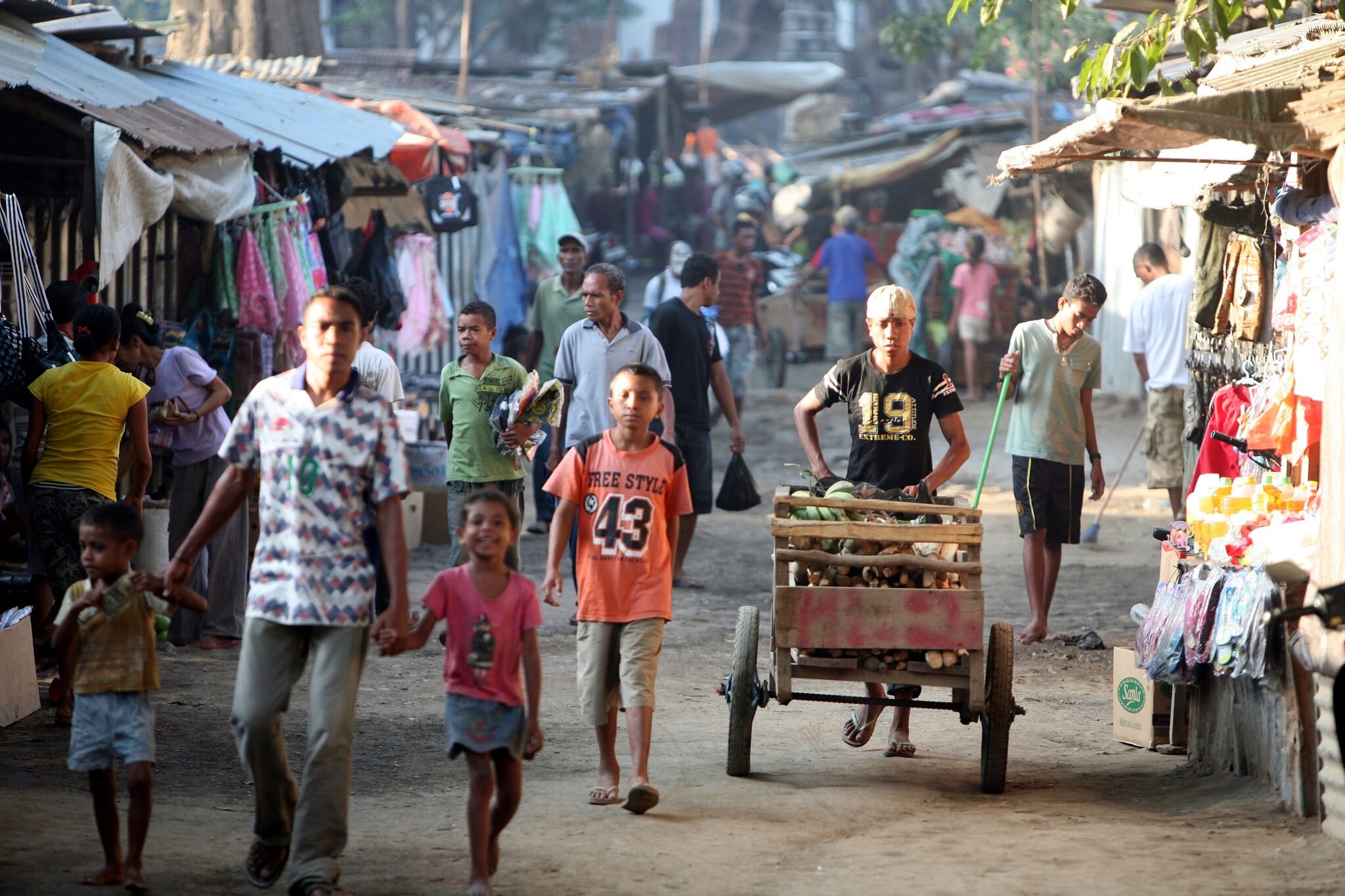
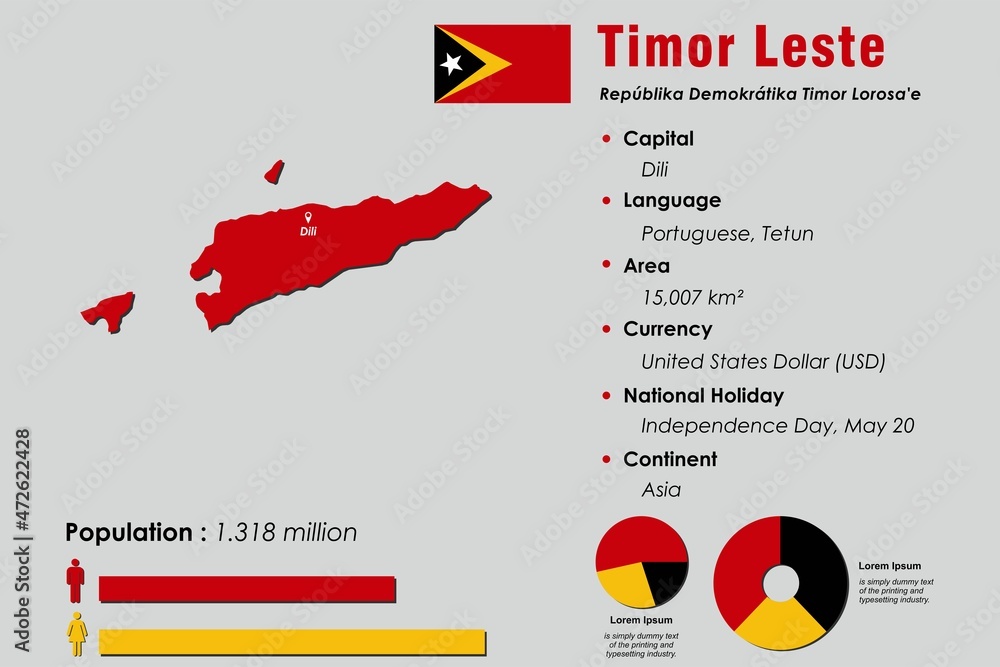
This is a demography of the population of Timor-Leste including population density, ethnicity, education level, health of the populace, economic status, religious affiliations and other aspects of the population.
Population size and structure
1,242,000 (2017)
Age groups
Median age
In 2015 the median age of the population was 19.6 years old. The population living in rural areas is slightly younger (19.0) compared to the population living in urban areas (20.6). Ainaro Municipality has the lowest median age with 17.3 years, while Dili Municipality has the highest median age with 21.2 years.
Vital statistics
UN estimates
Registration of vital events is in Timor-Leste not complete. The Population Department of the United Nations prepared the following estimates. Population estimates account for under numeration in population censuses.
Demographic and Health Surveys
Total Fertility Rate (TFR) and Crude Birth Rate (CBR):
Fertility rate by municipality
Aileu Municipality and Ainaro Municipality have the highest fertility rate with 5.5 children per woman, followed by Ermera Municipality with 5.4 children per woman.
Between 2014/15, around 43.5% of the births occurred in a health facility, up from 36.3% in 2010/11. This percentage varies widely from 77.5% in Dili Municipality to only 15.1% of all births in Ermera Municipality.
Life expectancy at birth
Average life expectancy at age 0 of the total population.
Ethnic groups
- Austronesian (Malayo-Polynesian), Papuan, small Chinese particularly Cantonese people and Europeans particularly Portuguese people descent.
Religion
- Roman Catholic 97.6% (2015 est.)
- Protestant/Evangelical 2% (2015 est.)
- Islam 0.2% (2015 est.)
- Other 0.2% (2015 est.)
Languages
- Tetum (official), Portuguese (official), Indonesian (constitutionally defined as a 'working language') and English (constitutionally defined as a 'working language').
- Note: There are a total of about 16 indigenous languages, of which Tetum, Galole, Mambae, and Kemak are spoken by significant numbers of people. The Tetum language is partially influenced by European languages, particularly Portuguese, a legacy of Portuguese rule.
References
External links
- Fernandes, Ajito; Prabawa, Titi Susilowati; Therik, Wilson M. A. (April 2022). "The Livelihood of Chinese Migrants in Timor-Leste". Social Sciences. 11 (4): 157. doi:10.3390/socsci11040157. ISSN 2076-0760.